


Send Message
Privacy statement: Your privacy is very important to Us. Our company promises not to disclose your personal information to any external company with out your explicit permission.

FARIZON MOTOR TECHNOLOGY CO.,LTD
Before the installation and construction of diesel marine engines, sufficient adaptation assessment and preparation work must be completed, and they cannot be directly lifted into the site. Firstly, the power and speed specifications of the main engine are determined based on the ship's purpose, load capacity, and navigation area. Inland waterway transport ships, offshore operation ships, and fishing boats have significant differences in power requirements, and power selection should match the propeller propulsion characteristics to avoid large horses pulling small cars or insufficient power.
Review the layout of the cabin space, reserve maintenance channels around the main engine, and ensure that components such as the crankcase, fuel injectors, filters, and water pumps can be maintained in the future; Confirm that the size of the machine base, the position of the anchor bolt holes, and the thickness of the base steel plate meet the load-bearing requirements. At the same time, sort out the list of supporting systems, including cooling system, fuel system, lubricating oil system, exhaust system, starting system, security alarm system, and prepare materials such as pipes, valves, seals, and shock absorbers in advance.
Construction personnel must have the qualification for installing marine power equipment, be familiar with the requirements of classification society regulations, prepare detailed installation and construction plans, clarify shaft alignment standards, pipeline test pressures, and commissioning processes, and complete ship inspection and reporting before starting work.
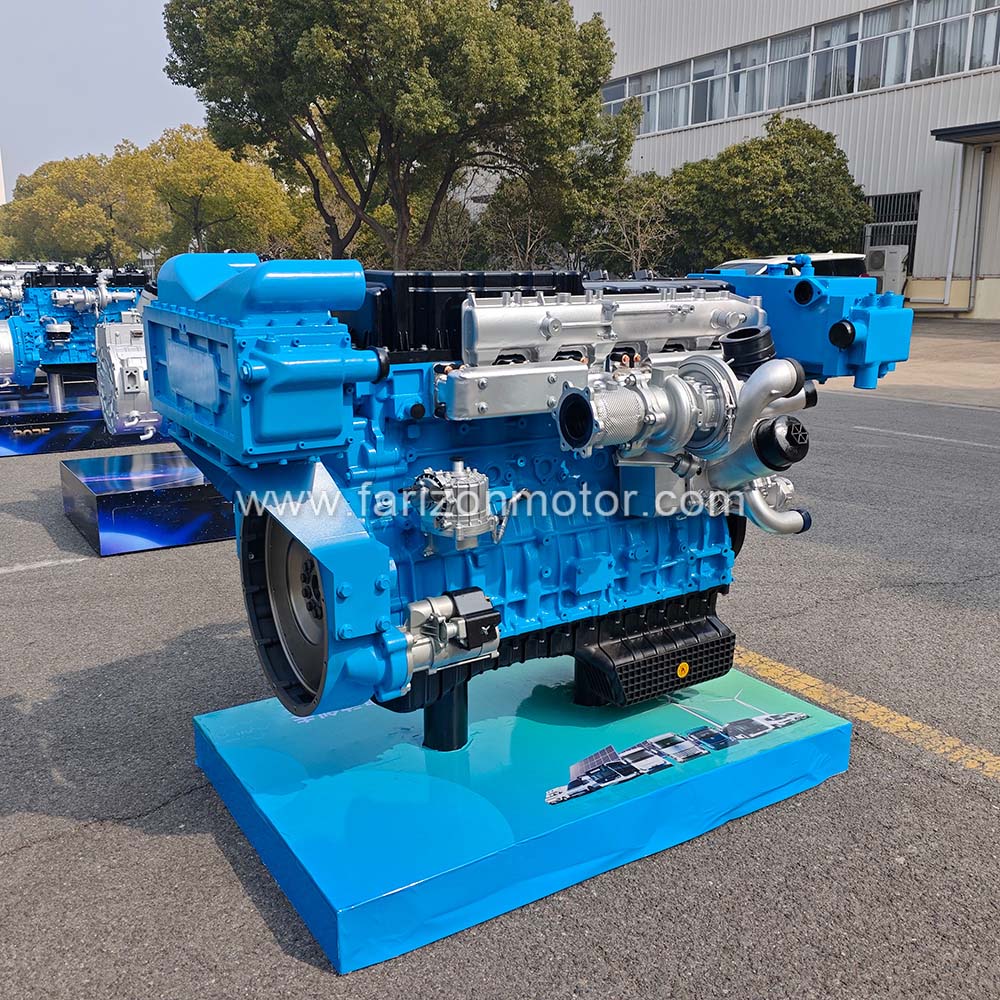
The host hoisting is a crucial step in the installation process. Use specialized lifting equipment to lift steadily according to the engine lifting point position. Single point lifting or excessive tilting is strictly prohibited to prevent deformation of the engine body. After the main engine is placed on the hull base, the initial positioning is achieved by adjusting the gasket, and the focus is on completing the shaft alignment operation.
The alignment of the shaft system directly affects the operating status of the crankshaft, transmission shaft, and propeller. Excessive alignment deviation can cause abnormal bearing wear, increased overall vibration, and in severe cases, damage to the crankshaft. Using a dial gauge or laser alignment instrument, strictly control the radial and end face deviations within the allowable range. After alignment is completed, pour epoxy resin pads or install steel adjustment washers, then evenly tighten the anchor bolts. After tightening, retest the alignment data to ensure compliance with the standards.
After fixing the host, install each supporting pipeline in sequence. The fuel pipeline is made of oil resistant materials, and the high-pressure fuel pipe is firmly fixed to avoid vibration fatigue cracking; Reasonable layout of cooling water pipelines, reducing elbow resistance, and anti-corrosion treatment of seawater pipelines; Install corrugated pipes to compensate for thermal expansion in the exhaust system, and wrap the exhaust pipes with insulation to prevent burns and engine room temperature rise. All pipeline joints are sealed reliably, metal components are grounded reliably, and static electricity hazards are eliminated.
After all mechanical, piping, and electrical installations are completed, enter the debugging phase and prohibit direct operation with load. Firstly, complete the static inspection: add lubricating oil, coolant, and fuel that meet the specifications, and eliminate air in the pipeline; Check the tightness of each connecting part; Manually rotate and confirm that the crankshaft rotates smoothly without any jamming.
After starting the engine, first idle and warm up, observe whether the oil pressure, water temperature, and exhaust color are normal, and monitor for any abnormal noise or vibration. After stable idle operation, gradually increase the speed and complete low load, medium load, and rated load tests in sequence. Record parameters such as oil pressure, cooling water temperature, exhaust temperature, and fuel consumption rate under each operating condition, and verify whether they meet the factory technical standards.
Synchronize the debugging of the security system, simulate faults such as low oil pressure, high water temperature, and overspeed, and confirm that the alarm and automatic parking protection functions are reliable and effective. After all tests meet the standards, the installation records, pipeline test reports, debugging parameters, equipment qualification certificates and other materials shall be sorted out, and the ship inspection department shall cooperate to complete the inspection. Only after obtaining the corresponding certificates can it be put into navigation use.
During the ship's preparation phase, the engine personnel check the fuel, lubricating oil, and coolant levels, confirm that there are no leaks in the pipelines, open relevant valves, and turn the engine to inspect the moving parts. Before starting, ensure that the clutch is in the disengaged position. After starting, idle and warm up the engine. Wait for the oil pressure and water temperature to rise to the normal range before gradually increasing the load and driving.
During the voyage, closely monitor the operating parameters of the main engine, regularly record the oil pressure, cooling water temperature, exhaust temperature, and fuel consumption, and promptly investigate any abnormal fluctuations in parameters. Avoid long-term overload operation, adjust the throttle reasonably according to the waterway, load, and sea conditions, and keep the engine working in the economic speed range.
When stopping at the port, gradually reduce the load, idle for a few minutes, and wait for the temperature to drop evenly before stopping. It is forbidden to turn off the engine directly under high load conditions. When parked for a long time, regularly start the engine to prevent internal components from rusting and keep the battery charged.
Daily maintenance is the foundation for ensuring the long-term reliable operation of diesel marine engines. Regularly replace the engine oil, oil filter, fuel filter, and air filter element according to the usage hours, use original filter elements and lubricating oil that meet the specifications, and eliminate inferior parts. Regularly check for leaks in the fuel and cooling water pipelines, and clean the seawater cooler regularly to ensure efficient heat dissipation.
Regularly check the tension of the belt, the electrolyte of the battery, and the working status of the starter motor. Drain the accumulated water at the bottom of the fuel filter to prevent moisture from entering the fuel injection system and causing component damage. The cabin should be well ventilated and equipped with fire-fighting equipment. Open flames are strictly prohibited in the fuel operation area.
When the engine produces abnormal noise, vibration, or abnormal exhaust color, immediately reduce the load and stop the engine for inspection. Do not sail with any illness. The maintenance work is carried out by professionals, and precision components such as fuel injectors and high-pressure oil pumps need to be professionally calibrated to avoid precision damage caused by self disassembly.
The installation and use of diesel marine engines is a systematic project, from early adaptation evaluation and precise installation, to standardized debugging, compliant operation, and regular maintenance, each link affects the safety and service life of the ship's power system. FARIZON marine diesel engines, with mature power technology and comprehensive after-sales support, can provide reliable power solutions for inland and offshore ships. With standardized installation, operation, and maintenance management, they help ships navigate safely and efficiently.
Email to this supplier
Privacy statement: Your privacy is very important to Us. Our company promises not to disclose your personal information to any external company with out your explicit permission.
Fill in more information so that we can get in touch with you faster
Privacy statement: Your privacy is very important to Us. Our company promises not to disclose your personal information to any external company with out your explicit permission.